
Watching your child struggle to express themselves or connect with peers can feel isolating. But what if the answer wasn’t another therapy session – it was a drum kit, a piano, or their own voice?
Music therapy NDIS programs and structured music lessons are creating real communication breakthroughs for NDIS participants across Australia. Not through magic, but through consistent, evidence-based practice that meets learners exactly where they are.
Quick Answer:
- Music lessons develop turn-taking, active listening, and non-verbal communication skills through structured practice.
- NDIS participants show measurable improvements in social interaction when music is part of their support plan.
- Evidence shows music engages multiple brain areas simultaneously, strengthening neural pathways for language and social processing.
- Both music therapy NDIS funding and Capacity Building support can cover lessons with registered providers.
Why Music Works for Communication Development
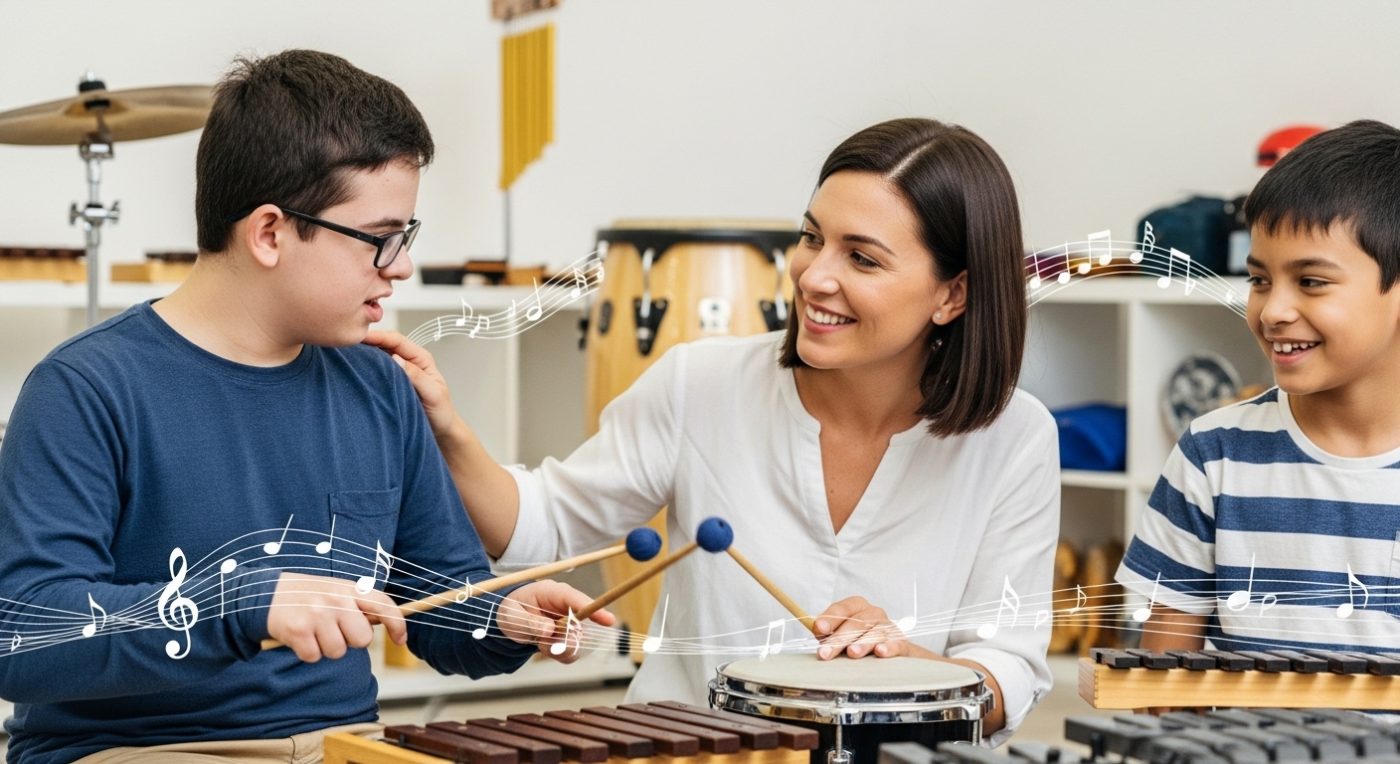
Music creates structured opportunities to practise turn-taking, listening, and expressive communication – skills that often develop differently for neurodivergent learners.
When an NDIS participant learns an instrument, they’re not just reading notes. They’re interpreting timing, responding to a teacher’s cues, matching rhythm with another person, and expressing emotions without needing words. A 2014 Cochrane systematic review found that music therapy helps children with autism spectrum disorder improve their communication skills, including initiating behaviour, and social interaction within therapy contexts.
The repetitive structure of music lessons provides predictability, reducing anxiety and creating a safe space to try new social behaviours. A violin teacher in Melbourne might use call-and-response patterns where the student echoes a melody – practising listening, processing, and responding in a low-pressure format.
Communication Skills Music Lessons Actually Build
Turn-Taking & Conversation Flow
Playing music with others requires waiting, listening, and knowing when to contribute. These same skills transfer directly to conversations. During NDIS music lessons, participants practise stopping and starting on cue, which mirrors the back-and-forth rhythm of dialogue.
Non-Verbal Communication
Music is full of non-verbal cues: watching a teacher’s hands for tempo changes, reading facial expressions for dynamics, and feeling the energy shift in a room. NDIS singing lessons particularly strengthen eye contact and recognition of facial expressions, as students learn to connect breath, posture, and emotional expression.
Emotional Regulation & Expression
Many NDIS participants find words limiting when expressing how they feel. Music offers an alternative channel. A piano teacher in Melbourne working with a non-speaking participant might help them use loud/soft dynamics to communicate frustration or joy, building emotional literacy without relying on language.
Joint Attention & Shared Focus
Playing music with another person requires sustained, shared attention – a foundation for all social interaction. Duets, ensemble work, or even simple clapping games naturally develop this skill.
Music Therapy NDIS vs Music Lessons: What’s the Difference?
Music therapy NDIS programs are delivered by registered music therapists with allied health training. They use music interventions to address specific therapeutic goals like speech development, emotional regulation, or trauma processing. These sessions are often 1:1 and highly individualised.
Music lessons focus on skill-building – learning an instrument, reading music, and developing technique. But for NDIS participants, the social and communication benefits are just as valuable as the musical ones. A music class might group learners with similar support needs, creating opportunities for peer connection in a structured setting.
Both approaches work. Some participants use music therapy NDIS funding for therapeutic goals, then transition to Capacity Building-funded music lessons as they develop skills and confidence.
What Parents & Support Coordinators Should Look For
Trauma-Informed & Neurodiversity-Affirming Teachers
Ask potential teachers about their experience with neurodivergent learners. Do they understand sensory sensitivities? Can they adapt teaching methods without lowering expectations?
Clear Communication Goals
A quality provider will work with you to identify specific communication or social goals – like initiating greetings, maintaining eye contact during instruction, or asking for help when stuck. They should measure progress, not just focus on musical skill.
Flexible Session Structures
Some NDIS participants need movement breaks, visual schedules, or shorter sessions with more frequent contact. Teachers who adapt to individual needs get better outcomes.
Peer Interaction Opportunities
Group music classes create natural chances to practise social skills with peers. Look for providers offering small group sessions or ensemble opportunities tailored to NDIS learners.
How to Access Music Through Your NDIS Plan
Music therapy NDIS supports typically fall under Improved Daily Living (Capacity Building). If you’re working with a registered music therapist, they can invoice directly under this line item.
For music lessons NDIS, you’ll need to demonstrate how lessons connect to plan goals around communication, social participation, or community inclusion. Support coordinators can help link music lessons to your participant’s functional capacity outcomes.
Providers must be registered or you’ll need plan management or self-management to access non-registered music teachers. Always confirm NDIS registration status before committing.
Finding the Right Music Program in Melbourne
Melbourne has a strong network of music educators experienced with NDIS participants. Whether you’re looking for a teacher who understands sensory processing, is trained in developmental delays, or music classes in Melbourne for social skill-building, the right match makes all the difference.
Look for providers who offer trial sessions, communicate openly with support teams, and see your participant as a whole person, not just a diagnosis.
Ready to explore how music can support your NDIS participant’s communication goals?
Bumblebee Centre offers inclusive, neurodiversity-affirming music lessons with teachers experienced in NDIS support. Our approach prioritises connection, confidence, and skill-building at each learner’s pace. Learn more about our NDIS music lessons or get in touch to discuss how we can support your plan goals.
