
Choosing between group and private music lessons is one of the first dilemmas parents face when beginning their child’s musical journey, especially when exploring options like piano lessons for kids or other beginner-friendly instruments.
The right choice between group vs private music lessons depends on your little one’s age, personality, goals, and how they learn best. Both work well and produce confident musicians, but the trick is matching the format to the student.
The Quick Answer:
- Group lessons suit younger kids (age 4-8), social learners, and families wanting a gentler, more affordable entry point.
- Private lessons suit kids chasing specific goals like exams, auditions, and serious technical progress, as well as those who get distracted in group settings.
- Personality matters more than age. Extroverts tend to thrive in groups; introverts often prefer one-on-one.
- A hybrid approach also works. Many of our students do both, and they progress faster for it.
- There’s no wrong choice, only a wrong fit; and that’s fixable with a trial lesson.
What’s the Real Difference?
Group music lessons for kids mean your child learns alongside other students at a similar level. Everyone works through the same material, plays together, and learns from each other’s mistakes (and wins!) Think of it as a rehearsal room with training wheels.
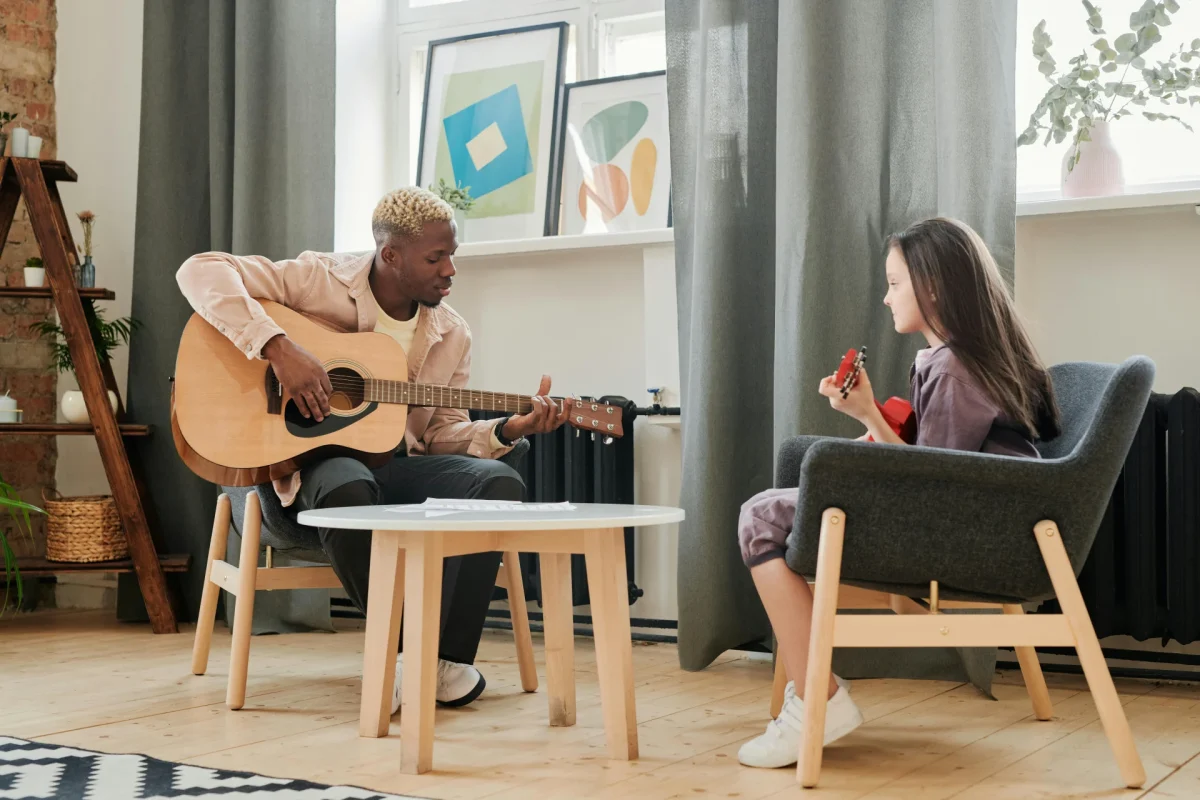
Private music lessons for kids are one-on-one with a teacher, whether they’re learning piano, guitar, or taking drum lessons in Melbourne. Every minute is built around your child’s strengths, struggles, and pace. If they nail something in five minutes, you move on. If they need more time on the same bar, they get it.
Neither is necessarily “better”. They’re just different tools for different jobs.
Why Group Music Lessons Work (Especially Early On)
There’s real science behind the social side of learning music. One study tracked children receiving group music instruction and found measurable gains in reading and language skills after just one year; benefits tied directly to the group learning environment, not private tuition.
Here’s what group music lessons for kids do especially well:
- Builds social confidence. Kids learn to play in time with others, listen, and take turns.
- Normalise making mistakes in front of people; a skill every musician eventually needs.
- Create friendly momentum. When the kid next to you nails a cord, you want to as well.
- Feel less intimidating for kids. Younger children often freeze in one-on-one settings and feel more relaxed in groups.
For 4- to 7-year-olds, we often recommend starting in a group setting. The energy keeps them engaged, and ensemble playing teaches rhythm and listening in a way no solo lesson can replicate.
Why Private Music Lessons Deliver Faster Technical Progress
Once a child has specific goals, whether that’s an AMEB exam, a school performance, or a serious push on technique, private lessons are usually the better fit. A private teacher sees everything: the bent wrist, the rushed counting, the bad habit forming in real time. They can correct it on the spot.
Private music lessons for kids shine when:
- Your child is preparing for exams, auditions, or performances.
- They’re shy or easily distracted in group settings.
- They’ve outgrown the pace of their group class.
- They want to play music outside a standard group curriculum, such as film scores, jazz, or specific pop songs.
The trade-off is that private lessons cost more per hour, and some younger kids find the intensity of constant individual attention tiring before they’re ready for it.
Age and Personality: The Two Biggest Deciders
Rather than asking which is better, consider what your child needs now.
- 4-6 Year Olds: Start in a group. They need play, peers, and low pressure.
- 7-10 Year Olds: It depends. Watching how they learn at school is usually a good indicator of which teaching style will benefit them most.
- 11+ Years Old: Private lessons start to make more sense, especially if they’re serious about playing. Teens can absorb detailed feedback and work on nuanced technique in ways younger kids can’t yet.
It’s worth checking out our guide on what age to start music lessons to go deeper into instrument-specific readiness.
The Best Kept Secret: Do Both
Here’s what a lot of parents don’t consider when it comes to group vs private music lessons: you don’t have to pick one and stick with it forever. Many of our strongest students combine both formats, taking weekly private lessons for technical development, and joining a group class or ensemble for the social and performance side. It’s the same reason professional musicians play in bands AND practice alone. Different skills come from different contexts.
For younger beginners, this might look like starting in a group for six months, then adding a private lesson once a month as they progress. For older students preparing for exams and performances, weekly private lessons and group ensemble classes complement each other well.
Choosing the Right Fit in Melbourne
At Bumblebee Centre, our class sizes stay small and deliberate: enough peers to keep things social, but not so many that everyone gets meaningful attention. We offer both formats across our music classes in Melbourne, including music lessons in Narre Warren for families in the south-east.
Not sure which suits your child? Book a trial lesson. Thirty minutes in a classroom tells you more than thirty articles will. And we’ll happily recommend a format we think will best fit your child, not just the one that fills a seat.
